LIHEAP 2026 Application Guide: Submit Heating Aid Fast
Advertisements
This LIHEAP 2026 Application Guide explains how eligible American households can request heating utility assistance, prepare required documents, identify local application deadlines, and access emergency energy support through authorized government agencies.
The LIHEAP 2026 Application Guide helps households understand the process of requesting financial assistance for heating expenses, electricity bills, and qualifying home energy emergencies.
Families experiencing financial difficulties can benefit from understanding local eligibility requirements, preparing supporting documents, and contacting authorized energy assistance agencies before their circumstances become critical.
Although a 14-day preparation schedule can help organize regular applications, households facing immediate utility disconnection or dangerous heating conditions should request emergency assistance without delay.
Understanding LIHEAP: What It Is and Who It Helps
The Low Income Home Energy Assistance Program, commonly known as LIHEAP, provides federal funding to support eligible households struggling with residential energy expenses.
Depending on local program policies, available assistance may address heating bills, cooling expenses, energy-related emergencies, and selected improvements that support residential energy efficiency.
This LIHEAP 2026 Application Guide focuses on helping households understand available benefits while identifying the appropriate procedures for requesting heating assistance through authorized agencies.
Who May Qualify for LIHEAP Assistance?
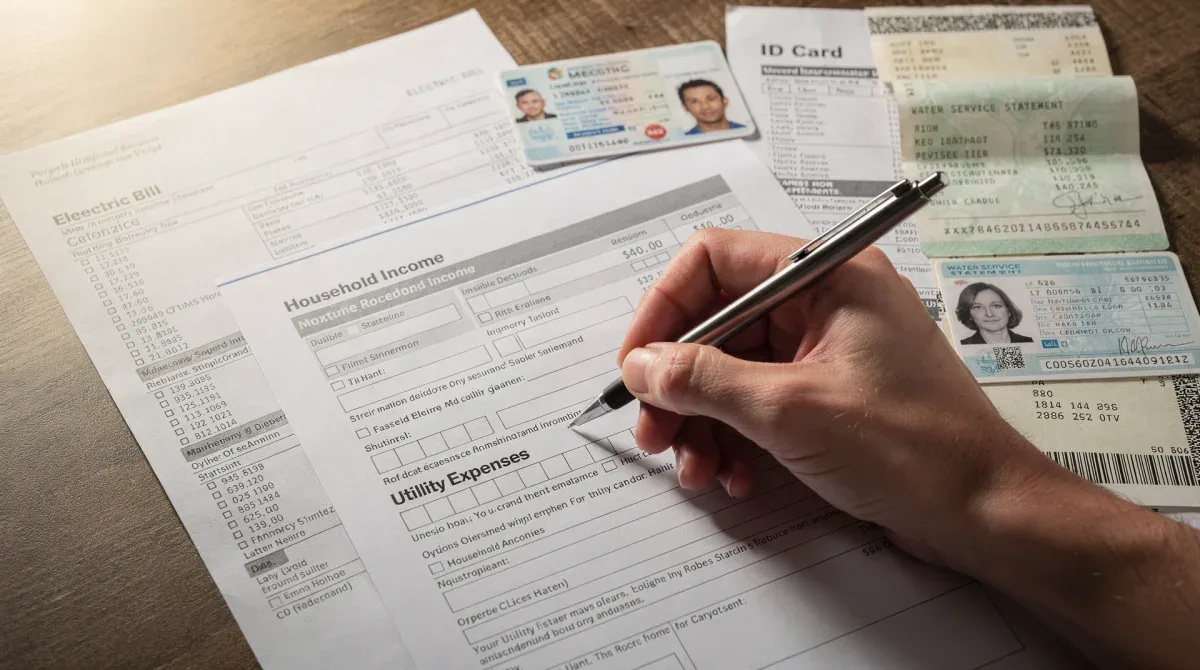
Eligibility generally depends on household income, household size, residential circumstances, and additional requirements established by the agency administering energy assistance within a particular jurisdiction.
Understanding eligibility for LIHEAP can help applicants determine whether their household circumstances may satisfy applicable financial and residential requirements before beginning the formal application process.
Households containing older adults, young children, or individuals with disabilities may receive priority under certain local program policies, depending on available funding and eligibility criteria.
How LIHEAP Funding Works
LIHEAP is federally funded but administered through states, territories, tribal governments, and designated local organizations responsible for implementing energy assistance services within their communities.
Benefit amounts and application procedures can differ between jurisdictions because administering agencies establish specific operational policies within the requirements of the federal assistance program.
The LIHEAP 2026 Application Guide therefore encourages applicants to confirm local requirements rather than assuming identical assistance amounts or application procedures across the United States.
Types of Energy Expenses Covered
LIHEAP assistance may address qualifying residential heating expenses associated with electricity, natural gas, heating oil, propane, or other eligible household energy sources.
Some local programs also provide emergency assistance, cooling support, weatherization services, or qualifying repairs involving essential residential heating and cooling equipment.
Coverage depends on available program components, household eligibility, local funding arrangements, and specific circumstances affecting the applicant's residential energy requirements.
Key Dates and Deadlines for the LIHEAP 2026 Application Cycle
LIHEAP application periods vary throughout the United States because participating jurisdictions establish their own schedules for accepting applications and distributing available energy assistance funding.
Many heating assistance programs operate seasonally, while others provide ongoing applications or separate emergency services according to local conditions and available financial resources.
Following the LIHEAP 2026 Application Guide requires confirming the exact application dates applicable to your location, rather than relying exclusively on general national timelines.
Why Early Application Is Crucial
Energy assistance funding is limited, and some administering agencies may stop accepting applications when available resources are exhausted or designated application periods close.
Submitting a complete application early can provide additional time for addressing documentation requests, correcting missing information, and coordinating with the appropriate energy assistance agency.
However, early submission does not guarantee approval or prevent utility disconnection, making direct communication with both the agency and energy provider particularly important.
Where to Find Local Deadlines
State human services departments, community action agencies, and designated energy assistance offices can provide information regarding application schedules and local program participation requirements.
Households can also review available information about LIHEAP heating relief in 2026 while confirming specific deadlines directly with the organization responsible for administering benefits in their area.
Because funding availability and application schedules can change, applicants should verify current information before preparing documents or making assumptions about when assistance becomes available.
Understanding the Proposed 14-Day Application Schedule
Preparing a regular LIHEAP application within 14 days can provide a practical organizational target for households that are not currently experiencing an energy emergency.
However, this preparation period is not a nationwide federal deadline, and local application windows may require households to submit their information considerably sooner.
The LIHEAP 2026 Application Guide uses this timeframe exclusively as a planning strategy, while recommending immediate action whenever households face urgent energy-related circumstances.
Required Documents for Your LIHEAP Application
Preparing supporting documentation before submitting an application can help households respond to eligibility requirements and reduce delays associated with incomplete or inaccurate information.
Required documents vary by jurisdiction, but agencies commonly request information concerning household identity, residential address, income sources, and existing residential energy expenses.
This LIHEAP 2026 Application Guide recommends obtaining the local agency's documentation checklist before gathering personal records or submitting information through an application portal.
Proof of Identity and Household Composition
Applicants may need identification documents for themselves and information concerning other household members included in the energy assistance application under applicable local requirements.
Accepted identification may include government-issued identification cards, driver's licenses, birth certificates, or other documents specifically recognized by the agency reviewing the application.
Household composition information helps administering organizations evaluate applicable financial requirements and determine which individuals should be included in the household's eligibility assessment.
Essential Financial Documentation
Income verification may involve recent pay stubs, Social Security benefit statements, unemployment compensation records, pension documents, or other evidence of household financial resources.
Applicants should confirm which income sources must be reported and the specific period of earnings used by their administering agency when evaluating eligibility.
Accurate financial documentation is essential to the LIHEAP 2026 Application Guide because incorrect or incomplete income information may delay the agency's eligibility determination.
Proof of Residential Address
Residential documentation helps establish that the applicant lives at the property associated with the household's heating or electricity expenses and requested assistance.
Depending on local requirements, acceptable records may include rental agreements, mortgage statements, utility bills, official correspondence, or other documents verifying the applicant's current address.
Renters whose utility expenses are included in their monthly rent should contact their administering agency to determine what additional documentation may be necessary.
Utility Bills and Disconnection Notices
Recent utility bills provide information concerning the household's energy provider, account number, outstanding balances, billing address, and other details relevant to the assistance request.
Households facing service interruption should also retain disconnection notices, past-due payment demands, and relevant communications received directly from their residential energy provider.
Including appropriate energy-related documentation can help agencies evaluate the circumstances described in the LIHEAP 2026 Application Guide and identify potentially applicable assistance programs.
The Step-by-Step LIHEAP 2026 Application Process
The application process generally begins by identifying the appropriate local agency, reviewing eligibility requirements, obtaining required documentation, and completing the designated energy assistance application.
Some jurisdictions accept online submissions, while others may require telephone appointments, mailed documents, in-person applications, or additional procedures before reviewing household eligibility.
The LIHEAP 2026 Application Guide organizes these responsibilities into practical steps that applicants can adapt according to their local program requirements and household circumstances.
Step 1: Find Your Local LIHEAP Agency
Begin by identifying the state, territorial, tribal, or local organization responsible for administering residential energy assistance in the geographic area where your household lives.
The federal government's official energy assistance resource provides information about LIHEAP eligibility, application options, and locating appropriate offices responsible for helping eligible households.
Applicants may also contact their local 211 information and referral service for assistance identifying community organizations and other resources related to household energy expenses.
Step 2: Confirm Household Eligibility
Review the administering agency's current income requirements, household definitions, residential conditions, and other eligibility criteria before completing the formal energy assistance application.
Certain jurisdictions may consider participation in other public assistance programs when evaluating household eligibility, although applicable procedures and documentation requirements vary.
Following the LIHEAP 2026 Application Guide does not independently establish eligibility, which must be determined by the organization responsible for administering the requested benefits.
Step 3: Obtain the Official Application Form
Once the appropriate agency has been identified, obtain its authorized application form and review instructions concerning document submission, required signatures, and application processing procedures.
Use official government websites or authorized community organizations rather than unfamiliar platforms requesting unnecessary personal information or charging fees for access to application materials.
Contact the administering agency directly if you require assistance understanding application questions, accessing forms, or identifying available accommodations for completing the submission process.
Step 4: Complete the Application Form
Provide accurate information concerning household members, residential address, financial circumstances, energy expenses, and other details requested within the official energy assistance application.
Review every completed section and confirm that submitted information corresponds with supporting documents, particularly when reporting income figures, utility account details, and household composition.
Completing the required information carefully can help prevent avoidable processing delays when following the procedures outlined in this LIHEAP 2026 Application Guide.
Step 5: Attach All Supporting Documents
Organize the requested documents according to the agency's instructions, ensuring that submitted copies remain readable and contain the information necessary for reviewing household eligibility.
When submitting documents electronically, verify that uploaded files are complete, correctly formatted, and associated with the appropriate sections of the official application.
Retain copies of submitted materials and related correspondence in a secure location so you can respond efficiently if the agency requests additional information.
Step 6: Submit Your Application
Submit the completed application using an authorized method, which may include an online government portal, a scheduled appointment, or another locally approved submission procedure.
Whenever available, retain an application reference number, submission receipt, confirmation email, or other documentation demonstrating that your application has been received.
The LIHEAP 2026 Application Guide recommends recording the submission date and relevant contact information to simplify future communications with the administering agency.
Step 7: Follow Up on Your Application Status
After submission, contact the appropriate agency according to its recommended follow-up procedures and retain information concerning any additional documentation or clarification requests.
Some administering organizations provide online status tracking, while others communicate through telephone calls, mailed notices, email messages, or scheduled applicant appointments.
Promptly responding to legitimate requests for additional information may help prevent unnecessary delays, although processing times remain dependent on local agency procedures.
How to Organize a Regular LIHEAP Application Within 14 Days
A structured preparation schedule can help households organize application responsibilities without overlooking important financial documentation, eligibility requirements, or local submission instructions.
The following timeline is an illustrative planning framework intended for regular heating assistance applications when no immediate emergency or earlier deadline exists.
Households using the LIHEAP 2026 Application Guide should shorten this schedule whenever possible, particularly when available funding or approaching deadlines require immediate submission.
Days 1 to 3: Confirm Requirements and Available Funding
During the initial stage, identify the appropriate administering agency and confirm whether regular heating assistance applications are currently being accepted in your residential area.
Review current eligibility conditions, application methods, potential appointment requirements, necessary supporting documents, and any deadlines associated with the applicable energy assistance program.
If you discover that your household faces an urgent disconnection or dangerous heating situation, immediately request emergency assistance rather than continuing the regular preparation schedule.
Days 4 to 7: Gather Supporting Records
Collect the documents requested by the administering agency, including appropriate identification, financial records, utility bills, and information concerning your household's residential circumstances.
Review the documents for accuracy and completeness, paying particular attention to names, dates, income amounts, utility account numbers, and other identifying information.
This stage of the LIHEAP 2026 Application Guide can be completed sooner whenever all necessary records are already available and ready for submission.
Days 8 to 10: Complete and Review the Application
Complete the official application form according to the instructions provided by your administering agency, ensuring that all relevant questions receive accurate and complete responses.
Compare the completed application with supporting documents and contact the agency if any questions arise concerning income calculations, residential eligibility, or household information.
Whenever the application is complete, submit it immediately rather than unnecessarily waiting until the end of the proposed preparation period.
Days 11 to 14: Submit and Confirm Receipt
If the application has not already been submitted, provide all required information through the officially designated submission method before the applicable local deadline.
Retain confirmation that the application was received and establish which method should be used to communicate with the agency about its processing status.
This final stage establishes a practical follow-up routine within the LIHEAP 2026 Application Guide without guaranteeing approval or payment within the same 14-day period.
Special Considerations for Emergency Heating Aid
LIHEAP crisis assistance addresses qualifying situations in which households experience serious difficulties accessing essential residential energy services or face an immediate threat of service interruption.
Emergency assistance procedures may differ substantially from regular heating applications because crisis situations require appropriate evaluation according to specific federal and local program requirements.
The LIHEAP 2026 Application Guide emphasizes that households facing immediate heating emergencies should request assistance promptly instead of following the proposed regular application timeline.
What Qualifies as an Energy Emergency?
Potential energy emergencies may include an imminent utility disconnection, loss of heating service, insufficient heating fuel, or an essential heating system that stops functioning.
Local agencies establish specific crisis eligibility criteria, meaning the circumstances qualifying for emergency assistance can vary depending on geographic location and available program components.
Households should describe their circumstances accurately and provide any available documentation demonstrating the urgency of their residential energy requirements.
Understanding the Federal 48-Hour Crisis Assistance Requirement
Federal LIHEAP law generally requires crisis intervention programs to assist eligible applicants by addressing their energy emergency within 48 hours after an application is made.
This requirement concerns assistance intended to resolve the qualifying crisis rather than guaranteeing that every applicant receives a direct financial payment within two days.
Eligibility determination, applicable program conditions, and available forms of intervention remain important considerations when households request assistance through local energy crisis programs.
Understanding the 18-Hour Life-Threatening Emergency Requirement
Federal law establishes a shorter 18-hour crisis intervention requirement for eligible households experiencing qualifying energy emergencies that create life-threatening circumstances.
Households should immediately explain any conditions that could endanger residents, including dangerous indoor temperatures or medical circumstances that increase vulnerability during an energy interruption.
The LIHEAP 2026 Application Guide recommends seeking immediate emergency services whenever someone's safety is threatened, without waiting for the completion of benefit processing.
Contacting Your Utility Provider During an Emergency
Contact your energy provider directly if you receive a disconnection notice, experience interrupted service, or cannot meet an upcoming payment obligation for essential utilities.
Ask whether temporary payment arrangements, hardship assistance, or locally applicable disconnection protections may provide additional options while your energy assistance request is being reviewed.
Submitting a LIHEAP application does not automatically suspend every utility disconnection, making it essential to confirm available arrangements directly with the energy provider.
Beyond LIHEAP: Additional Resources for Energy Assistance
Households experiencing difficulties paying residential energy bills may benefit from exploring other public assistance programs, community organizations, and utility provider resources alongside LIHEAP.
Different assistance options may address emergency payments, outstanding balances, energy efficiency improvements, or financial responsibilities that fall outside the scope of a particular LIHEAP program.
The LIHEAP 2026 Application Guide encourages households to consider complementary resources while reviewing the eligibility requirements and availability associated with each assistance opportunity.
Utility Company Assistance Programs
Some utility companies offer hardship programs, payment arrangements, arrearage management initiatives, or other resources designed to help eligible customers manage outstanding residential energy expenses.
Budget billing arrangements may distribute estimated annual energy expenses across more consistent monthly payments, although they do not necessarily reduce total electricity or heating costs.
Contacting the utility provider directly allows households to identify available programs and understand their specific eligibility requirements, payment conditions, and financial limitations.
Weatherization Assistance Program
The Weatherization Assistance Program supports eligible households through qualifying energy efficiency improvements intended to address energy consumption and improve residential comfort under applicable program requirements.
Potential services may include insulation improvements, air sealing, energy assessments, and other approved measures identified through the program's household evaluation procedures.
Weatherization operates separately from regular LIHEAP bill assistance, although eligible households may benefit from exploring both programs when seeking longer-term energy affordability solutions.
Community Organizations and Local Assistance
Community action agencies, charitable organizations, religious institutions, and other local nonprofit groups may offer assistance or referrals for households experiencing difficulties with residential energy costs.
The availability of these resources depends on geographic location, organizational policies, eligibility requirements, and the amount of assistance funding available at particular times.
Combining appropriate local resources with the LIHEAP 2026 Application Guide may help households identify additional options when their immediate financial circumstances require further support.
Common Pitfalls and How to Avoid Them in Your Application
Energy assistance applications can experience delays when required information is missing, supporting documentation cannot be verified, or applicants use incorrect submission procedures.
Understanding common application problems helps households prepare more effectively and reduces the possibility of unnecessary complications during the agency's review and eligibility determination process.
This LIHEAP 2026 Application Guide recommends reviewing all local instructions carefully rather than assuming every jurisdiction follows identical documentation and processing requirements.
Avoiding Incomplete Application Forms
Review the application before submission to ensure that required sections, financial disclosures, signatures, and relevant household information have been completed according to official instructions.
Missing information can require applicants to provide additional documentation or clarification before the administering agency is able to determine their eligibility for assistance.
Keeping an organized record of completed forms and submitted documents can simplify this process if the agency identifies information requiring clarification.
Avoiding Incorrect Household Income Reporting
Household income information should accurately reflect the financial circumstances requested by the administering agency, including applicable earnings periods and relevant sources of financial support.
Do not assume that every financial resource receives identical treatment because countable income definitions and documentation requirements can differ among administering jurisdictions.
When uncertain about reporting requirements, request clarification directly from the agency before completing the financial sections of your LIHEAP application.
Applying for the Correct Assistance Component
Regular heating assistance, cooling assistance, crisis intervention, and weatherization services may operate through different application procedures, eligibility conditions, or designated assistance periods.
Households experiencing an immediate energy emergency should clearly communicate their circumstances rather than assuming that a regular assistance application will receive emergency processing automatically.
Identifying the appropriate assistance component represents an important part of the LIHEAP 2026 Application Guide and helps households follow relevant application procedures.
Protecting Yourself From Energy Assistance Scams
Fraudulent websites and individuals may attempt to exploit public interest in government benefits by requesting application fees, banking credentials, or unnecessary personal information.
Use authorized government channels and designated local agencies when submitting sensitive documents, and verify unexpected requests before providing confidential household or financial information.
No independent website can guarantee LIHEAP approval, and households should avoid paying individuals who promise immediate access to federal heating assistance benefits.
What to Expect After Submitting Your LIHEAP Application
After submission, the administering agency reviews the application and supporting documents to determine whether the household satisfies applicable requirements for the requested energy assistance component.
Processing duration may depend on application volume, document completeness, local staffing resources, funding availability, and the specific urgency associated with individual household circumstances.
The LIHEAP 2026 Application Guide recommends maintaining communication with the administering agency while continuing to monitor utility bills and any approaching disconnection deadlines.
Understanding Application Approval
Approved applicants may receive notification describing the assistance amount, applicable program conditions, and how the approved benefit will be delivered to address eligible energy expenses.
Depending on local arrangements, assistance may be paid directly to an energy provider or distributed through another authorized method established by the administering agency.
Households should confirm how the benefit affects their outstanding utility balance and whether additional payments remain necessary after assistance has been applied.
Responding to Requests for Additional Information
The reviewing agency may request additional income records, updated utility statements, residential documentation, or clarification concerning information included within the original energy assistance application.
Applicants should respond within the specified timeframe and retain records of submitted materials to help maintain organized communication throughout the application review process.
Prompt responses can reduce avoidable delays, although providing additional documentation does not independently guarantee eligibility or approval for the requested assistance.
Understanding Application Denials and Appeal Rights
An application may be denied when the household does not satisfy applicable eligibility requirements or when the agency cannot establish eligibility from available information.
Review the denial notice carefully to understand the decision, any applicable appeal deadlines, and the procedures for requesting reconsideration or a fair hearing.
The LIHEAP 2026 Application Guide encourages applicants to retain relevant documents and contact the appropriate agency for clarification when they believe a decision was incorrect.
Planning for Long-Term Household Energy Stability
Energy assistance can provide valuable financial support, but maintaining longer-term household energy stability may require additional planning beyond the initial government benefit application.
Reviewing household energy expenses, available assistance resources, property conditions, and utility payment arrangements can help families prepare for changing costs throughout the year.
Using the LIHEAP 2026 Application Guide alongside realistic household budgeting may help applicants better understand their available options without assuming continued benefit eligibility.
Reviewing Monthly Energy Expenses
Compare recent energy bills and identify seasonal changes in heating or cooling expenses to understand how residential utility costs influence your overall household budget.
Contact the utility provider if unexpected billing changes occur or if estimated payments appear inconsistent with previous consumption and established residential energy usage patterns.
Maintaining organized financial records can also support future assistance applications when households need to demonstrate changes in income or residential utility expenses.
Monitoring Future Application Periods

Households that receive assistance during one program cycle should not automatically assume that benefits will continue without additional eligibility reviews or subsequent application requirements.
Keep track of local application announcements, funding updates, and relevant administrative changes before the beginning of future heating or cooling assistance periods.
Remaining informed about local requirements can help households prepare future applications more effectively while identifying alternative assistance resources when necessary.
Key Takeaways From the LIHEAP Application Process
Successfully requesting energy assistance requires understanding local eligibility conditions, gathering appropriate documentation, submitting accurate information, and responding to communications from the designated administering agency.
The LIHEAP 2026 Application Guide provides a structured approach to these responsibilities while recognizing that application requirements and available benefits differ between jurisdictions.
The following overview summarizes important application considerations, with the 14-day preparation period representing an organizational target rather than a universal federal deadline.
Key Point | Brief Description |
|---|---|
Urgency | Submit your LIHEAP application within 14 days for urgent aid. |
Eligibility | Income-based criteria for low-income households. |
Documents | Proof of income, identity, residency, and utility bills. |
Application Process | Find local agency, complete forms accurately, and follow up. |
Important clarification: The 14-day timeframe shown above is not an official nationwide LIHEAP requirement. Households experiencing urgent energy emergencies should contact their local crisis assistance agency immediately.
Frequently Asked Questions About LIHEAP 2026
What is the primary purpose of LIHEAP?
LIHEAP helps eligible low-income households manage residential energy expenses. Depending on local program availability, assistance may cover heating bills, cooling costs, qualifying energy emergencies, and selected weatherization or energy-related repair services.
How quickly should I submit my LIHEAP application for urgent aid?
Submit your emergency assistance request immediately if you face utility disconnection, loss of heating, or another qualifying energy crisis. Do not wait 14 days before contacting your local administering agency.
Is there an official nationwide 14-day LIHEAP application deadline?
No. Application deadlines vary by jurisdiction and program component. The 14-day timeframe described in this article is a suggested preparation schedule for regular applications, not a federal deadline.
What documents are essential for a LIHEAP application?
Commonly requested documents include identification, household income records, residential address verification, and recent utility bills. Specific documentation requirements depend on the local agency administering the assistance program.
Can I apply for LIHEAP if I rent my home?
Yes. Renters may qualify when they satisfy applicable income, residential, and other program requirements. Households whose energy expenses are included in their rent should confirm local eligibility procedures.
What happens if my LIHEAP application is denied?
Review the denial notice for information concerning the decision and applicable appeal procedures. Federal LIHEAP requirements provide for a fair hearing opportunity when qualifying assistance claims are denied or not handled with reasonable promptness.
How quickly must LIHEAP respond to an eligible energy crisis?
Federal law generally requires assistance that resolves an eligible household's energy crisis within 48 hours after the application, or within 18 hours when qualifying life-threatening circumstances exist.
Does the emergency response deadline guarantee a cash payment?
No. The crisis assistance requirement concerns an intervention that addresses the qualifying energy emergency. The form of assistance depends on applicable program requirements and the circumstances of the household.
Can Social Security beneficiaries qualify for LIHEAP?
Yes. Receiving Social Security benefits does not automatically prevent a household from qualifying. Eligibility depends on applicable income limits, household circumstances, and other local program requirements.
Can unemployed individuals apply for LIHEAP?
Yes. Unemployed individuals may qualify when their households satisfy applicable program requirements. Agencies may request unemployment statements or other appropriate documentation concerning household income.
Can homeowners receive heating assistance?
Yes. Eligible homeowners may request LIHEAP assistance for qualifying residential energy expenses, subject to applicable income requirements, local program policies, and available funding.
Will LIHEAP pay my entire utility balance?
Not necessarily. Benefit amounts depend on local program rules, eligible energy expenses, household circumstances, available funding, and applicable assistance limits. Applicants may remain responsible for part of their outstanding balances.
Can applying for LIHEAP stop my electricity from being disconnected?
Not automatically. Applicants should contact their utility provider immediately to confirm whether payment arrangements, assistance commitments, or applicable disconnection protections are available.
Can I apply for LIHEAP online in 2026?
Many jurisdictions provide online application options, while others use in-person appointments or alternative procedures. Contact your local administering agency to confirm which submission methods are available.
Do I have to repay LIHEAP assistance?
Properly awarded LIHEAP benefits generally are not loans and do not require repayment. However, incorrect payments or benefits obtained through false information may be subject to recovery under applicable rules.
Does following the LIHEAP 2026 Application Guide guarantee approval?
No. This guide provides educational information about application preparation and program requirements. Eligibility and benefit decisions are made exclusively by authorized administering agencies.
Can LIHEAP replace a broken heating system?
Some local programs may provide qualifying heating system repair or replacement assistance. Availability depends on local program components, household eligibility, technical assessments, and available funding.
Can I receive LIHEAP more than once?
Potential eligibility for additional assistance depends on local benefit frequency limits, program components, household circumstances, and available funds. Contact your agency to confirm applicable requirements.
Where can I find official LIHEAP application information?
Official information is available through federal government resources and authorized state, territorial, tribal, or local energy assistance agencies. Verify application requirements directly with the administering organization.
Conclusion: Next Steps for Receiving Heating Utility Assistance
The LIHEAP 2026 Application Guide provides a practical framework for understanding household eligibility, organizing supporting documentation, submitting applications, and identifying emergency energy assistance opportunities.
Although completing a regular application within 14 days can provide a useful preparation target, households facing immediate energy emergencies should request assistance without delay.
By consulting authorized agencies, maintaining accurate financial records, and confirming local program requirements, eligible households can pursue available energy assistance through appropriate and reliable channels.