Federal Lead Hazard Grants: 5-Part Document Checklist for Homes
Advertisements
Federal lead hazard abatement grants can help eligible households address lead-based paint hazards in older homes. Learn how HUD-funded local programs operate, which properties may qualify, and the five categories of documents homeowners and landlords should prepare before applying for assistance.
Federal lead hazard abatement grants can provide important assistance to qualifying families living in older homes where lead-based paint may create health risks.
Housing constructed before 1978 deserves particular attention because residential lead-based paint was widely used in the United States before federal restrictions took effect.
This guide explains how to locate HUD-funded lead hazard reduction programs, understand eligibility requirements, and organize five categories of documents that may be requested during the application process.
Understanding Federal Lead Hazard Abatement Grants for Older Homes
Lead-based paint can become hazardous when it deteriorates or is disturbed, allowing contaminated dust or paint chips to accumulate in living spaces.
Young children are especially vulnerable to lead exposure, making prevention an important public health priority.
Federal lead hazard abatement grants support programs intended to identify and reduce these hazards, but assistance is generally administered by eligible local organizations rather than awarded directly to individual homeowners by HUD.
How HUD-Funded Lead Hazard Reduction Programs Work
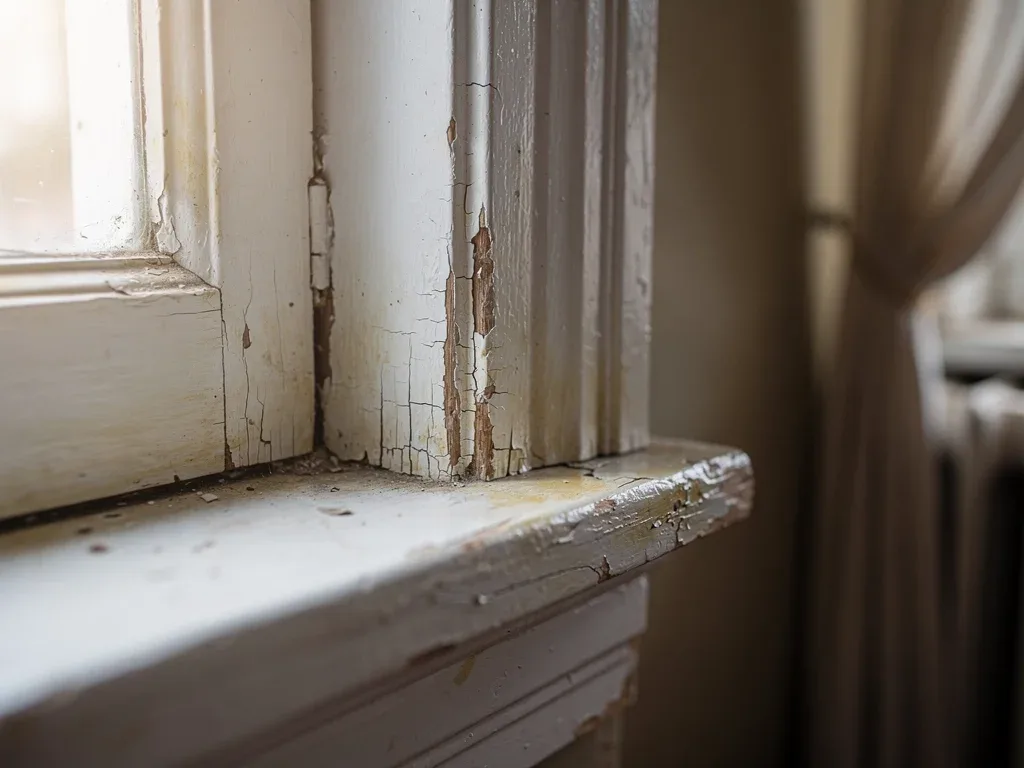
The U.S. Department of Housing and Urban Development provides funding to eligible government entities through programs designed to reduce lead-based paint hazards.
State and local grantees then administer projects according to applicable federal requirements and their approved program procedures.
Families interested in assistance should contact a participating local program to learn whether applications are open and which eligibility criteria apply.
Why Homes Built Before 1978 Receive Special Attention
Residential buildings constructed before 1978 are more likely to contain lead-based paint because such products were used extensively before the federal consumer ban.
However, the age of a property does not automatically confirm that hazardous lead exposure is occurring.
Professional assessments can help identify actual risks, including deteriorating paint, contaminated dust, and affected surfaces that require appropriate attention.
Who May Qualify for Federal Lead Hazard Abatement Grants?
Eligibility frequently depends on property age, location, household income, and whether children younger than six live in or regularly visit the residence.
Some programs also consider households with pregnant residents, while rental properties may be eligible under specific conditions.
Because requirements vary, the safest approach is to review the local program's published rules before beginning the application process.
Checklist Part 1: Property Ownership and Housing Records
Property records help administrators identify the home, verify legal ownership, and determine whether it falls within the program's eligible service area.
Homeowners and landlords may be asked to provide documents confirming the property address and their relationship to the residence.
When preparing for federal lead hazard abatement grants, organizing these records in advance can simplify the initial eligibility review.
The Critical Role of Property Ownership Documentation
Some programs require applicants to establish ownership before authorizing inspections or improvements on a property.
Acceptable evidence may include recorded deeds, property tax information, and other documents recognized by the local administrator.
However, renters may also be able to initiate an eligibility inquiry, with the property owner providing additional consent or documentation when required.
Documents That May Be Requested
The precise documents needed vary depending on whether the applicant is a homeowner, landlord, or tenant.
Applicants should gather records that accurately identify the property and avoid submitting sensitive documents through unofficial websites.
The following examples can serve as a preparation checklist, but they are not mandatory requirements for every program.
Recorded Deed: May establish legal ownership of the property.
Property Tax Statement: Can help confirm the property address and ownership details.
Mortgage Statement: May provide supporting information when requested.
Landlord Authorization: May be required when a tenant applies for assistance involving a rental unit.
How to Resolve Property Record Discrepancies
Differences between property records and application information can create delays when administrators cannot verify the residence.
For example, a property may appear under a previous owner's name or contain an outdated mailing address.
Contacting the local program before submission can help determine which alternative documents are acceptable for verifying ownership or occupancy.
Checklist Part 2: Household Income Verification
Many HUD-funded lead hazard reduction programs prioritize households with limited incomes under applicable federal and local guidelines.
Income requirements are often based on the area's median income and adjusted for household size.
Applicants researching federal lead hazard abatement grants should verify the income limits used by the specific program serving their location.
Understanding Income-Based Eligibility
Some programs use income thresholds tied to percentages of Area Median Income, commonly referred to as AMI.
These thresholds vary by location because household income levels differ between communities.
Local administrators may also apply additional eligibility criteria, so income qualification alone does not guarantee that a property will receive assistance.
Required Financial Statements and Tax Records
Income verification helps administrators determine whether the household meets the financial conditions established for the program.
Depending on the local requirements, applicants may need to provide recent pay records, tax documents, or evidence of other income sources.
Individuals should consult the program's instructions to confirm which documents are necessary and how recent the information must be.
Pay Stubs: May document current employment income.
W-2 Forms: Can provide information about reported employment earnings.
Federal Tax Returns: May be requested to evaluate household income.
Benefit Statements: Can document Social Security, pension, or other applicable income.
Self-Employment Records: May include tax schedules or other financial documentation.
What if Your Income Has Recently Changed?
Household income may change because of unemployment, reduced working hours, retirement, or other personal circumstances.
When current earnings differ substantially from earlier tax returns, a local administrator may request additional documentation.
Learning more about income eligibility requirements can help applicants understand why programs review multiple financial records.
Checklist Part 3: Lead Inspection and Risk Assessment Records
Evaluating a home's lead hazards is an essential part of determining what work may be necessary.
Depending on the local program, qualified inspectors or risk assessors may examine painted surfaces, dust, and other potential sources of exposure.
However, families seeking federal lead hazard abatement grants should not assume they must pay for a private inspection before contacting a participating program.
Understanding Lead-Based Paint Inspections
A lead-based paint inspection is intended to determine whether lead-based paint is present on relevant surfaces.
These evaluations are conducted by appropriately certified professionals using methods accepted under applicable requirements.
The resulting information can help property owners and program administrators understand where lead-based paint has been identified.
What a Lead Risk Assessment Evaluates
A risk assessment focuses on identifying lead-based paint hazards and potential exposure pathways.
This may involve examining deteriorated paint, friction surfaces, contaminated dust, and other conditions relevant to the property.
The findings help determine which areas require treatment and what interventions may be appropriate under the local program.
What These Reports May Contain
Professional reports can document the locations assessed, testing methods used, and findings related to lead-based paint or identified hazards.
The exact reporting format depends on applicable rules and the type of evaluation performed.
Some local programs arrange assessments after an initial eligibility review, so applicants should confirm the required sequence before obtaining independent services.
Inspection Findings: Information about tested surfaces and identified lead-based paint.
Risk Assessment Findings: Documentation of hazards and relevant exposure conditions.
Recommended Interventions: Proposed actions that may address documented hazards.
Clearance Documentation: Post-work verification required for certain completed lead hazard reduction activities.
Why Professional Evaluation Is Important
Lead contamination cannot always be identified through appearance alone, especially when hazardous dust is present.
Disturbing old paint without appropriate precautions can increase exposure and create additional contamination.
Property owners should follow official guidance and avoid sanding, scraping, or removing suspected lead-based paint without understanding applicable lead-safe requirements.
Checklist Part 4: Proposed Work and Cost Documentation
Once a property is considered eligible and hazards have been evaluated, the administering program can determine appropriate next steps.
Some programs prepare their own work specifications, coordinate contractors, and obtain necessary cost estimates.
Therefore, applicants for federal lead hazard abatement grants should not assume that independently hiring contractors or obtaining multiple bids is required before the local review.
Understanding the Scope of Lead Hazard Reduction Work
A scope of work describes the interventions planned for identified hazards in the residence.
Depending on the property and program, the approved work may involve repairing surfaces, replacing certain components, or implementing other permitted hazard control methods.
The proposed approach must follow applicable requirements and reflect the conditions documented during the professional evaluation.
Detailed Plans and Professional Quotes
Some local administrators request contractor estimates or require participation from approved professionals.
Others manage contractor selection and budgeting directly after confirming household and property eligibility.
Before requesting private estimates, contact the relevant program to learn whether contractor bids are necessary and which qualifications are accepted.
Scope of Work: Identifies the approved surfaces and activities to be addressed.
Cost Estimates: May document labor, materials, and other eligible project expenses.
Contractor Qualifications: Establish that professionals meet applicable certification and licensing requirements.
Project Approvals: Confirm that the work is authorized under the relevant funding program.
Understanding Certified Lead Abatement Contractors
Lead abatement is a specialized activity intended to permanently address lead-based paint hazards.
The U.S. Environmental Protection Agency distinguishes certified lead abatement activities from ordinary renovation, repair, and painting work that may disturb old paint.
Because these activities have different regulatory requirements, applicants should use professionals accepted by the administering program and follow the procedures specified for the approved work.
Why You Should Not Start Work Before Approval
Beginning improvements before the local program authorizes them may affect whether the associated costs qualify for reimbursement or assistance.
Applicants should confirm the program's approval sequence before signing contracts or paying for services intended to be covered by grant funding.
Additional guidance about preparing for assistance programs may help applicants avoid mistakes during a federal grant application process.
Checklist Part 5: Proof of Residency and Occupancy Status
Residency and occupancy information help administrators determine who lives in a property and whether the household meets the applicable program criteria.
Some programs assist owner-occupied residences, while others also serve qualifying rental units or certain vacant properties.
When applying for federal lead hazard abatement grants, residents should verify which occupancy arrangements are accepted by the local program.
Validating Your Home's Occupancy
Administrators may request documents confirming that an applicant or qualifying household occupies the property.
Examples include recent utility bills, identification records, leases, and other documents displaying the current address.
The precise evidence required depends on the program, and renters may need landlord cooperation before improvements can begin.
Common Residency Documents
Applicants can prepare basic residency records while waiting for the official document list.
These materials may help establish who occupies the property and whether it serves as an eligible residence.
However, the program administrator determines which documents are acceptable for each application.
Utility Bills: May connect a household to the property address.
Government Identification: Can help verify identity and current residence.
Lease Agreements: May establish rental occupancy and the relationship with the property owner.
Occupancy Certifications: May be requested for certain qualifying households.
Special Requirements for Families With Young Children
Many lead hazard reduction programs prioritize homes where children younger than six live or regularly visit.
This focus reflects the particularly serious developmental risks that lead exposure presents to young children.
Some local programs may also consider pregnancy or other qualifying conditions, so applicants should review the official eligibility rules for their location.
How to Find Federal Lead Hazard Abatement Grants Near You
HUD-funded lead hazard reduction programs are generally administered by participating state or local agencies rather than through a single nationwide homeowner application.
Program availability depends on whether an organization serves the applicant's location and has funding available.
The first step in seeking federal lead hazard abatement grants is identifying the responsible local administrator and reviewing its current enrollment instructions.
Start With HUD and Local Housing Departments
HUD provides information about lead hazard reduction grants and related healthy housing initiatives.
Residents can use official housing department websites, local government resources, and published program information to identify assistance opportunities.
Additional information about housing assistance programs may also help residents understand how local eligibility reviews are commonly organized.
Questions to Ask Before Applying
Contact the administering organization to verify whether your property is located within its service area.
Ask about income limits, property age, child occupancy conditions, document requirements, and whether inspections are scheduled by the program.
Also confirm whether there are homeowner contributions, repayment conditions, or other obligations associated with receiving assistance.
Protecting Your Personal Information
Grant applications may involve sensitive documents such as income records, identification, and property ownership information.
Submit these materials only through official websites, verified program portals, or procedures provided by the responsible administrator.
Be cautious of third parties promising guaranteed approval or requesting unexpected upfront payments to release government grant funds.
Common Application Mistakes to Avoid
Incomplete records, incorrect assumptions about eligibility, and confusion about application procedures can complicate the review process.
Some applicants also pay for services before confirming whether the local program will arrange or cover those activities.
Understanding these issues can help households prepare more effectively when seeking federal lead hazard abatement grants.
Submitting Unnecessary or Outdated Documentation
Providing documents that do not match the requested reporting period may delay verification.
Likewise, preparing extensive paperwork before receiving the program's official instructions can create unnecessary work.
Applicants should follow the most recent checklist provided by their local administrator and update records when requested.
Assuming a Pre-1978 Home Automatically Qualifies
Property age is an important eligibility factor, but it does not establish household income qualification or confirm the presence of actionable lead hazards.
Many programs also apply location restrictions and requirements involving young children or other eligible residents.
Applicants should complete the program's screening process before assuming their residence is approved for assistance.
Hiring Unapproved Contractors
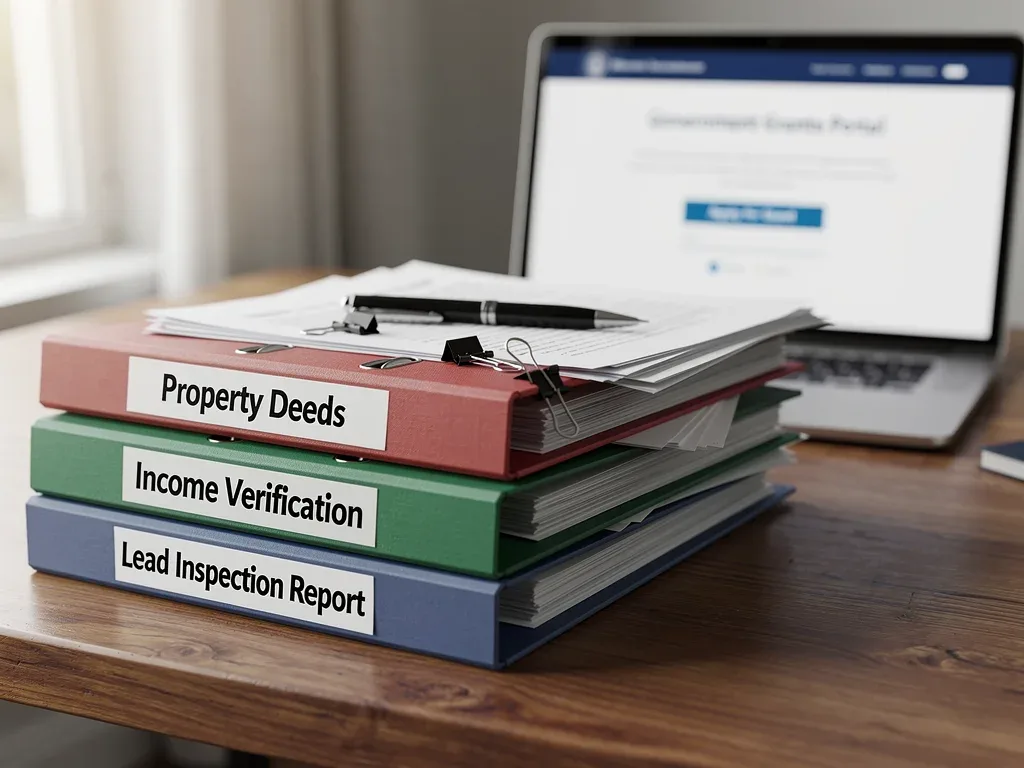
Using a contractor who does not meet the program's requirements can create safety concerns and affect whether costs qualify for assistance.
Lead abatement and certain renovation activities require appropriately certified professionals under applicable regulations.
Before arranging work, applicants should obtain instructions from the administering organization regarding accepted contractors and project approvals.
Federal Lead Hazard Abatement Grants: Document Checklist
The five categories below provide a practical framework for preparing an application for local lead hazard reduction assistance.
Not every local program requests every document listed, and some materials may be generated by inspectors or administrators after initial eligibility screening.
Use this table as a starting point while relying on the official requirements of the specific federal lead hazard abatement grants program serving your area.
Key Document | Purpose |
|---|---|
Property Ownership Proof | May establish ownership, property address, or authorization to perform work. |
Income Verification | Helps determine whether a household meets applicable program income requirements. |
Lead Inspection Reports | Documents lead-based paint or identified hazards when required; assessments may be arranged by the program. |
Scope of Work & Estimates | Describes approved hazard reduction activities and related project costs when applicable. |
Residency and Occupancy Proof | Supports verification of eligible occupants and household circumstances. |
Frequently Asked Questions About Lead Abatement Grants
Who is eligible for federal lead hazard abatement grants?▼
Eligibility depends on the administering program. Many HUD-funded initiatives focus on qualifying homes built before 1978, households meeting applicable income limits, and residences occupied or regularly visited by young children. Some programs also assist qualifying rental properties or households with pregnant residents. Applicants should verify the specific criteria used by their state or local program.
What is the typical timeframe for grant approval?▼
There is no universal approval timeline for household participation in HUD-funded lead hazard reduction programs. Processing depends on funding availability, eligibility screening, required assessments, administrative capacity, and project scheduling. Some applications may progress relatively quickly, while others require additional review. Contact the local administrator for current estimates rather than assuming a fixed number of weeks.
Can I do the lead abatement work myself after receiving the grant?▼
Grant-funded lead hazard reduction work generally must follow the administering program's approved procedures and applicable professional certification requirements. Homeowners should not assume that do-it-yourself work will qualify for funding. The EPA distinguishes lead abatement from ordinary renovation work, and different rules apply. Always obtain authorization before beginning work intended to receive grant assistance.
What if my home was built after 1978 but still has lead paint?▼
HUD's principal lead hazard reduction grant programs focus on eligible pre-1978 housing. A home built later may therefore fall outside the relevant property's eligibility requirements, even if lead-containing materials are suspected. Residents should consult local housing or health authorities to determine whether another assistance program or appropriate evaluation is available.
Are there specific state or local lead abatement programs available?▼
Yes. State and local governments administer many HUD-funded lead hazard reduction initiatives, and some communities provide additional assistance through other funding arrangements. Availability and eligibility vary by location. Check official government resources and local housing departments for active programs and information about federal assistance programs.
Looking Ahead: Preparing for Lead Hazard Reduction Assistance
Federal lead hazard abatement grants can support efforts to reduce dangerous lead exposure in eligible older homes, particularly those occupied by families with young children.
Organizing ownership records, income information, inspection documents, project details, and residency evidence can help applicants prepare, but the final requirements are established by the participating local program.
By starting with official HUD resources, confirming local eligibility rules, and following approved lead-safe procedures, homeowners, landlords, and tenants can make informed decisions about seeking assistance and improving residential safety.