2026 Energy Efficient Home Improvement Credit: Filing Form 5695
Advertisements
The Energy Efficient Home Improvement Credit ended for qualifying property placed in service after December 31, 2025. Homeowners filing their 2025 federal income tax returns in 2026 may still claim eligible 2025 improvements using IRS Form 5695, Part II.
This guide explains the final eligibility deadline, historical credit limits, required documentation, and common filing mistakes.
Understanding the Energy Efficient Home Improvement Credit in 2026 requires recognizing an important change to federal tax law: the credit is no longer available for new qualifying improvements placed in service after December 31, 2025.
However, eligible homeowners preparing their 2025 tax returns during the 2026 filing season may still be able to claim credits for qualifying improvements completed within the applicable deadline.
This guide explains how to use IRS Form 5695 correctly, which improvements previously qualified, what documentation to retain, and how to avoid common tax filing mistakes.
What Happened to the Energy Efficient Home Improvement Credit in 2026?
The Energy Efficient Home Improvement Credit, established under Section 25C of the Internal Revenue Code, previously supported qualifying residential energy efficiency projects.
Federal legislation enacted in July 2025 accelerated the program's termination, ending eligibility for specified expenditures and property placed in service after December 31, 2025.
As a result, homeowners cannot assume that qualifying insulation, windows, heat pumps, or similar improvements installed during 2026 will generate this federal tax credit.
Understanding the December 31, 2025 Deadline
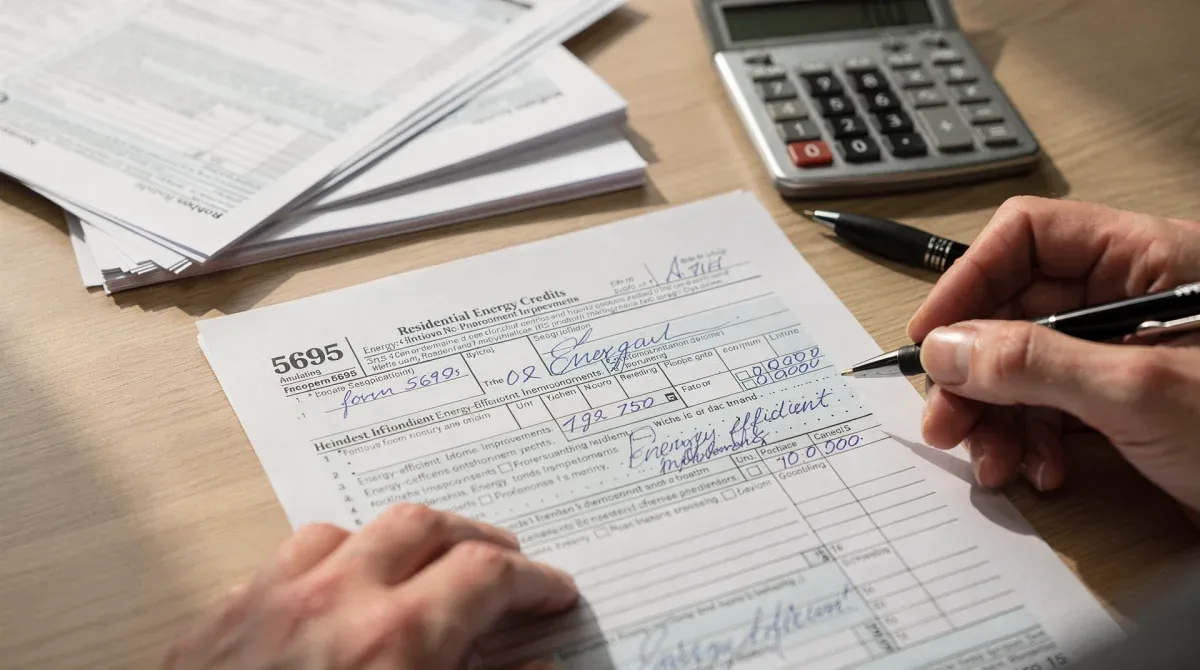
The IRS states that the Energy Efficient Home Improvement Credit is unavailable for expenditures or property placed in service after December 31, 2025.
For applicable improvements, the installation completion date is generally important when determining the tax year for claiming the credit.
Purchasing equipment before the deadline does not automatically establish eligibility if the qualifying installation was not completed within the permitted period.
Can Homeowners Still Claim the Credit in 2026?
Yes, certain homeowners may still claim the credit while filing their federal income tax returns for the 2025 tax year.
The important distinction is between the year a taxpayer files the return and the year the qualifying improvement was completed.
An eligible project placed in service during 2025 may be reported on the 2025 Form 5695 even though the return is prepared or submitted in 2026.
Why the Program Was Terminated Early
The credit's earlier legislative framework had allowed eligible improvements over a longer period before Congress changed the expiration date.
Public Law 119-21, enacted on July 4, 2025, accelerated the termination of several federal residential energy tax incentives.
The IRS subsequently updated its official instructions to reflect the revised deadlines and clarify the treatment of qualifying expenditures.
Understanding the Energy Efficient Home Improvement Credit
Before its expiration, Section 25C allowed eligible taxpayers to claim a nonrefundable federal income tax credit for certain energy-efficient improvements.
The credit generally equaled 30% of qualifying expenses, subject to individual category limits and an overall annual maximum.
Its purpose was to encourage eligible household improvements while helping reduce the after-tax cost of qualifying products and services.
Which Improvements Qualified Through 2025?
Potentially qualifying improvements included eligible insulation, air sealing, exterior doors, windows, skylights, and certain heating and cooling equipment.
Qualified heat pumps, heat pump water heaters, biomass stoves, and biomass boilers were subject to a separate annual credit limitation.
Each category had specific eligibility requirements, and a product's general energy-saving features did not automatically establish federal tax credit eligibility.
The Historical $1,200 Annual Credit Limit
For eligible improvements completed during 2025, the standard annual credit limit was generally $1,200 for specified efficiency improvements and qualifying equipment.
Individual limitations also applied, including a $600 maximum for qualifying exterior windows and skylights and a $150 limit for qualifying home energy audits.
Qualifying exterior doors were subject to a limit of $250 per door, with a $500 combined maximum for that category.
The Separate $2,000 Limit for Certain Equipment
Eligible heat pumps, heat pump water heaters, biomass stoves, and biomass boilers could qualify for a separate maximum annual credit of $2,000.
Combined with the general $1,200 limitation, qualifying expenditures could produce a maximum annual credit of $3,200 under the applicable rules.
These figures describe the former 2025 credit structure and do not authorize deductions or credits for new installations during 2026.
How to File IRS Form 5695 Correctly in 2026
Homeowners preparing a 2025 federal income tax return should use the version of IRS Form 5695 corresponding to the 2025 tax year.
The form contains separate sections for different residential energy credits, making it important to identify the correct category before entering expenses.
For eligible Section 25C improvements completed during 2025, the relevant section is Part II of Form 5695.
Step 1: Confirm the Correct Tax Year
Review invoices, installation completion records, and any other documentation identifying when the improvements were placed in service.
Determine whether the work was completed during the 2025 tax year and satisfied the applicable statutory deadline.
Use the corresponding tax-year forms and instructions rather than entering 2025 expenses into a later year's improvement-credit calculation.
Step 2: Identify Part II of Form 5695
Part I of the 2025 Form 5695 addresses the Residential Clean Energy Credit, which covers a different group of qualifying technologies.
Part II addresses the Energy Efficient Home Improvement Credit and includes questions concerning eligible improvements and residential energy property expenditures.
Entering expenses into the wrong section can produce an incorrect credit calculation, even when the underlying improvement otherwise qualifies.
Step 3: Complete the Property Eligibility Questions
Part II includes questions concerning the location of the home, the applicable main-home requirements, and other qualifying conditions.
For example, the qualified efficiency improvements section begins with questions on line 17 and requests the relevant property address.
Answer these questions according to the actual circumstances, since different types of improvements can have different eligibility requirements.
Step 4: Report Qualifying Costs in the Correct Categories
The form separates qualifying building envelope improvements from residential energy property expenditures and other qualifying items.
Enter eligible amounts in the corresponding lines using the form and instructions for the applicable tax year.
Do not assume every contractor charge or renovation expense qualifies, because the treatment of materials and installation labor varies by category.
Step 5: Apply the Credit Limits
Use the form's calculations to determine the appropriate credit percentages and category-specific maximums.
Apply the overall annual limitations and the tax liability limitation using the instructions rather than simply multiplying all renovation expenses by 30%.
Review the completed calculation carefully before transferring the allowable credit to the appropriate federal income tax return schedule.
Eligibility Requirements for Qualifying 2025 Improvements
Eligibility for the former Section 25C credit depended on the property, the taxpayer, the equipment, and the applicable installation requirements.
In many cases, the improvement needed to be made to an existing main home located in the United States.
Homeowners should review each requirement separately because owning a house or purchasing energy-efficient equipment did not automatically establish eligibility.
Main Home Requirements
A taxpayer's main home is generally the residence where the person lives most of the time.
Under the applicable rules, the building generally needed to be an existing home rather than a newly constructed residence.
The treatment of certain residential energy property and business use could involve additional conditions requiring individual review.
Business and Rental Property Restrictions
Properties used exclusively for business purposes did not qualify for the personal Energy Efficient Home Improvement Credit.
Landlords who did not live in a particular rental property generally could not claim the credit for that property under the main-home rules.
When a home was used partly for business, the qualifying amount could depend on the percentage of business use and the applicable expense category.
Product Efficiency Requirements
Qualifying products needed to meet the specific efficiency standards applicable to their category and the relevant year of installation.
For example, exterior windows and skylights generally needed to satisfy the applicable ENERGY STAR Most Efficient requirements.
Other equipment was evaluated using separate criteria, making manufacturer specifications and relevant product documentation essential.
Manufacturer Identification Requirements for 2025
For specified qualifying property placed in service during 2025, the IRS introduced qualified manufacturer identification requirements.
Taxpayers claiming the credit for covered items generally needed to report the appropriate Qualified Manufacturer Identification Number, or QMID.
Insulation and certain air-sealing materials were treated differently under these requirements, so the official instructions should be consulted for each product.
Which Expenses Could Be Included in the Credit?
The former credit rules distinguished between qualifying materials, equipment, installation services, and unrelated renovation expenses.
Correct expense classification matters because some categories permitted labor costs while others generally excluded installation labor.
Taxpayers should review itemized invoices and apply the corresponding rules before determining the amount eligible for a 2025 claim.
Insulation and Air-Sealing Expenses
Eligible insulation and air-sealing materials or systems could qualify when they satisfied the applicable technical and property requirements.
For these building envelope improvements, installation labor generally was not included in the qualifying cost calculation.
Homeowners should separate eligible material costs from labor and unrelated construction expenses wherever the documentation allows.
Exterior Windows and Doors
Certain qualifying exterior windows, skylights, and doors could produce credits within their respective limits.
Product efficiency standards and applicable requirements were important in determining whether the improvement qualified.
The associated installation labor generally did not count toward qualified building envelope costs, making detailed invoices useful.
Heating and Cooling Equipment
Qualifying residential energy property could include certain central air conditioners, furnaces, water heaters, and other eligible equipment.
Unlike building envelope components, properly allocable installation labor for some qualifying residential energy property could be included.
The exact treatment depended on the equipment type, applicable efficiency standards, and instructions for the 2025 tax year.
Home Energy Audits
Qualifying home energy audits could receive a credit of up to $150 under the former annual limits.
The audit needed to satisfy specific written reporting and certification requirements established for the program.
Beginning in 2024, applicable audits had to be conducted by, or under the supervision of, an appropriately qualified home energy auditor.
Documentation Needed for a 2025 Form 5695 Claim
Accurate recordkeeping helps taxpayers establish the nature, cost, and timing of qualifying improvements reported on a federal tax return.
The IRS may request supporting information if questions arise concerning the claimed property, expense amounts, or applicable eligibility requirements.
Keeping organized records is especially important now that the former program has expired and taxpayers may need to substantiate prior-year claims.
Keep Itemized Contractor Invoices
Invoices should identify the equipment or materials purchased, the work performed, and the amounts charged for relevant components.
Where possible, separate eligible materials and equipment from unrelated construction activities and nonqualifying labor expenses.
This information can simplify the credit calculation and support the treatment of individual expenses under applicable IRS instructions.
Retain Installation Completion Records
Documents showing when an installation was completed can help establish the relevant tax year and deadline compliance.
Useful records may include completed work orders, final invoices, acceptance documents, or other reliable contractor confirmations.
A purchase receipt alone may not establish that the qualifying property was placed in service by December 31, 2025.
Save Manufacturer Certifications and QMID Information
Retain relevant manufacturer statements, model numbers, technical specifications, and efficiency certifications.
For covered 2025 property, include the appropriate manufacturer identification information required by the IRS.
Documentation should correspond to the actual product installed rather than a similar model advertised as energy efficient.
Maintain Proof of Payment
Payment receipts, transaction records, and contractor statements may help support the costs reported on the return.
When an expense was partly reimbursed or subsidized, additional documentation may be needed to determine the appropriate qualifying amount.
Taxpayers should retain records for the applicable IRS recordkeeping period and consult a tax professional when circumstances are complex.
Understanding Nonrefundable Credits and Carryforwards
The Energy Efficient Home Improvement Credit was nonrefundable, meaning it could reduce eligible federal income tax liability but did not create a payment beyond that liability.
Its credit limitations and carryforward treatment differed from those of the separate Residential Clean Energy Credit.
Understanding the distinction is important because Form 5695 contains both categories and certain clean energy carryforward provisions remain relevant.
What Nonrefundable Means
A nonrefundable credit generally reduces the relevant federal income tax liability, subject to applicable limitations.
If the allowable credit exceeds the amount permitted by the tax liability calculation, the excess cannot necessarily be used.
For the former Energy Efficient Home Improvement Credit, unused amounts could not be carried into a future tax year.
Can Unused Section 25C Credits Be Carried Forward?
No. The Energy Efficient Home Improvement Credit did not provide a carryforward for an unused amount exceeding the applicable tax liability limitation.
This restriction applies even when a qualifying 2025 improvement otherwise satisfies the program's technical and property requirements.
Taxpayers should distinguish this rule from the separate carryforward provisions that apply to qualifying Residential Clean Energy Credits.
Why Form 5695 May Still Matter After 2025
Form 5695 also covers the Residential Clean Energy Credit, which had its own qualifying property categories and calculation rules.
Although new installations no longer qualify under the terminated federal credits after the relevant deadlines, certain previously generated clean energy credit carryforwards may remain available.
Consult the applicable form instructions to determine whether an existing carryforward can be applied to a later tax year.
Example: Calculating a Qualifying 2025 Home Improvement Credit
A numerical illustration can help explain how the former Section 25C limits operated for eligible improvements completed during 2025.
The following figures are hypothetical and assume all products, property conditions, installation deadlines, and documentation requirements were satisfied.
The example is not a calculation of a credit available for new improvements installed during 2026.
Example With Insulation and Windows
Suppose a homeowner completed $2,000 of qualifying insulation materials and $2,000 of qualifying exterior window purchases during 2025.
At 30%, the insulation would generate a preliminary $600 credit, while the window category would generate $600 after its applicable limit.
The combined preliminary amount would be $1,200, subject to the annual limitation and the taxpayer's applicable federal income tax liability.
Adding a Qualifying Heat Pump
Assume the same taxpayer also completed a separately qualifying heat pump installation with $8,000 of eligible expenses during 2025.
Thirty percent of that amount would equal $2,400, but the separate heat pump category was subject to a $2,000 annual cap.
Under the stated assumptions, the combined preliminary credit could reach $3,200 before applying relevant tax liability and other restrictions.
Why the Installation Date Changes the Outcome
The example assumes all qualifying improvements were completed within the applicable 2025 deadline.
If the same installations were completed after December 31, 2025, the terminated Section 25C credit would not be available for those new improvements.
That difference demonstrates why the tax year and placed-in-service date must be confirmed before calculating any expected federal incentive.
Can the Former Credit Be Combined With Other Incentives?
State programs, local governments, and utility providers may offer energy efficiency incentives that operate separately from federal income tax credits.
For qualifying 2025 Section 25C claims, the treatment of certain rebates and subsidies could affect the expenses used to calculate the federal credit.
Homeowners should review the specific rules of each incentive rather than assuming every benefit can be combined without adjustments.
Utility Rebates and Federal Credit Calculations
Certain utility subsidies or rebates may reduce the cost used in the federal tax credit calculation under applicable IRS rules.
The result depends on the nature of the payment and whether it qualifies as a purchase-price adjustment or another type of financial assistance.
Documentation showing the payment source, amount, and purpose can help determine its treatment.
State and Local Energy Efficiency Programs
Some states and utilities continue to offer incentives for qualifying insulation, heating equipment, efficient appliances, and other improvements.
Eligibility, available funding, installation requirements, and application periods vary by program and location.
These separate incentives may remain relevant for work completed in 2026 even though the former federal Section 25C credit has ended.
Evaluating Home Improvement Financing
Financing arrangements can affect the practical cost of energy improvements through interest charges, fees, and repayment obligations.
Homeowners should compare the full project cost with anticipated utility savings and any independently confirmed incentives.
Resources about federal grant applications may provide general background, but grant application procedures are separate from claiming IRS tax credits.
Common Mistakes When Filing Form 5695
Filing mistakes can result from using the wrong tax-year form, claiming ineligible improvements, or misunderstanding how different credit categories operate.
The early expiration of Section 25C creates another potential problem when taxpayers assume that all energy upgrades completed during 2026 remain eligible.
Reviewing official IRS instructions and supporting documents can reduce the likelihood of incorrect claims.
Claiming Improvements Completed in 2026
The most important error to avoid is claiming the terminated Energy Efficient Home Improvement Credit for property placed in service after December 31, 2025.
The fact that a product meets energy efficiency standards does not override the federal program's expiration date.
Taxpayers should confirm the completion date before preparing or submitting a Section 25C claim.
Using Part I Instead of Part II
Part I of the 2025 Form 5695 concerns the Residential Clean Energy Credit rather than the Section 25C improvement credit.
Part II contains the questions and calculations relevant to eligible energy-efficient home improvements completed during 2025.
Always use the appropriate part and tax-year instructions for the actual category of property being claimed.
Including Ineligible Labor Expenses
Some energy improvement categories allowed qualified installation labor, while building envelope improvements generally excluded labor costs.
Entering an entire renovation invoice without separating qualifying and nonqualifying items can overstate the credit.
Review the expense treatment for the specific component before entering totals on the form.
Forgetting Manufacturer Information
Certain qualifying property placed in service during 2025 required the taxpayer to report a valid Qualified Manufacturer Identification Number.
Failure to provide required information could affect eligibility even if the equipment otherwise met technical standards.
Check manufacturer documentation and the applicable IRS instructions before submitting the return.
Confusing a Credit With a Refund
A nonrefundable credit generally reduces eligible tax liability rather than providing a guaranteed cash payment.
The actual amount available may be lower than the preliminary calculation when the taxpayer's federal income tax liability is insufficient.
Taxpayers should not treat the former $3,200 annual maximum as an automatic refund or government payment.
What Homeowners Can Do for Energy Efficiency in 2026
Although Section 25C no longer applies to new qualifying improvements in 2026, home energy efficiency remains relevant for comfort and household operating costs.
Property owners can continue evaluating insulation, weather sealing, heating equipment, and other improvements based on their actual performance and costs.
Planning should focus on verified utility savings and currently available incentives rather than credits that have already expired.
Consider a Professional Home Energy Assessment
An assessment can help identify sources of energy loss, inefficient equipment, and potential opportunities for improving household comfort.
The findings may guide decisions about insulation, air sealing, heating systems, and other improvements.
Assessment costs and qualifications vary, so homeowners should evaluate available providers and any active local programs.
Review State Rebates and Utility Programs
Some local energy providers offer separate discounts, rebates, or assistance for eligible home upgrades.
These programs may have different deadlines and eligibility conditions from the terminated federal improvement credit.
Verify requirements directly with the administering organization before purchasing equipment or committing to installation expenses.
Prioritize Improvements With Practical Benefits
Insulation repairs, sealing appropriate air leaks, and maintaining heating and cooling equipment can support better building performance.
However, expected savings depend on the home's condition, climate, existing systems, installation quality, and occupant behavior.
A documented assessment can help prioritize improvements instead of assuming every expensive upgrade will deliver immediate financial returns.
Understand the Difference Between Grants and Tax Credits
A grant, rebate, loan, and federal income tax credit are different forms of financial assistance with separate requirements.
Information about application preparation may be useful for unrelated funding programs but does not replace the IRS eligibility rules.
Always confirm the official program name, responsible agency, current status, and application requirements before providing personal or financial information.
How to Verify Future Changes to Federal Energy Incentives
Tax legislation can change, but proposed or anticipated incentives should not be presented as existing benefits before their enactment.
For 2026, the Section 25C termination is established under current law and reflected in official IRS guidance.
Homeowners should rely on authoritative sources when evaluating future federal credits or other energy-related assistance programs.
Check Official IRS Publications
The IRS provides current instructions, eligibility information, forms, and updates concerning federal residential energy tax provisions.
Taxpayers should select the correct tax-year documents rather than relying on older articles describing prior credit rules.
The official IRS Form 5695 information page is a useful starting point for verifying available forms and guidance.
Monitor Enacted Legislation
New proposals may seek to modify residential energy incentives, but proposals do not establish new tax benefits unless enacted into law.
Any future reinstatement or replacement of Section 25C would need to be evaluated according to its actual statutory terms.
Homeowners should avoid scheduling projects around hypothetical credits without official confirmation.
Seek Qualified Tax Assistance When Needed
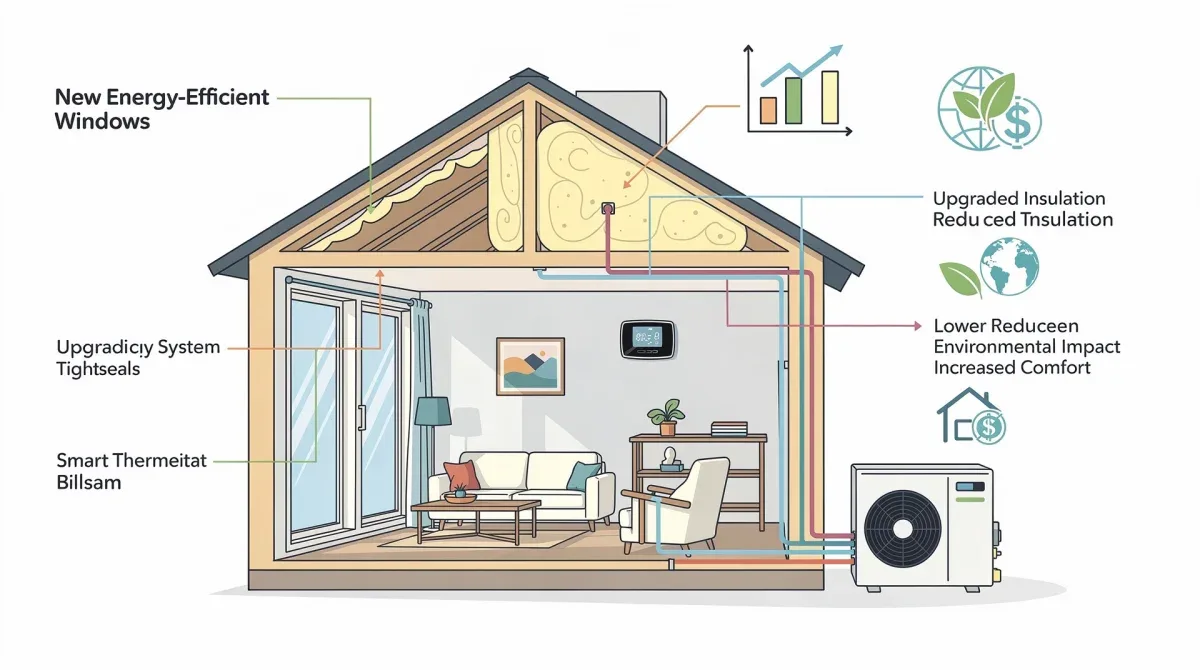
Claims involving shared ownership, mixed business use, multiple incentives, manufacturer identification requirements, or prior-year corrections can be complicated.
A qualified tax professional may help determine how the relevant federal provisions apply to the taxpayer's specific circumstances.
General resources about government assistance eligibility should not be substituted for official IRS instructions.
Key Takeaways About the Energy Efficient Home Improvement Credit
The former Section 25C credit is unavailable for qualifying expenditures or property placed in service after December 31, 2025.
Eligible improvements completed during 2025 may still be claimed on a 2025 federal income tax return filed during 2026, using Form 5695, Part II.
The original comparison table below has been updated to distinguish the program's historical requirements from its current terminated status.
Key Point | Brief Description |
|---|---|
Credit Overview | Federal tax credit for qualified energy-efficient home improvements completed within the applicable deadline ending December 31, 2025. |
Filing Form 5695 | Use Part II of the 2025 Form 5695 to claim eligible Section 25C expenses on a 2025 tax return. |
Eligibility | Applies to qualifying 2025 improvements subject to property, taxpayer, equipment, and other program requirements. |
Documentation | Retain receipts, invoices, installation dates, product specifications, and manufacturer identification information where required. |
Frequently Asked Questions About the Energy Efficient Home Improvement Credit
Is the Energy Efficient Home Improvement Credit available in 2026?
No. Under current federal law, the Section 25C credit is unavailable for qualifying property placed in service after December 31, 2025.
Can I claim a 2025 improvement on a tax return filed in 2026?
Yes. Qualifying improvements completed during 2025 may be claimed on the corresponding 2025 federal income tax return, subject to applicable rules.
What is IRS Form 5695?
Form 5695 is the IRS form used to calculate and claim applicable residential energy tax credits and report relevant carryforward amounts.
Which part of Form 5695 applies to Section 25C?
Part II of the 2025 Form 5695 is used for the Energy Efficient Home Improvement Credit.
What was the maximum annual credit for 2025?
Eligible taxpayers could potentially claim up to $3,200 annually, comprising a general $1,200 limitation and a separate $2,000 limit for specified equipment.
Did energy-efficient windows qualify?
Certain qualifying exterior windows and skylights completed by the applicable deadline could qualify, subject to technical standards and a $600 category limit.
Did heat pumps qualify for the credit?
Qualifying heat pumps and related eligible equipment could qualify for a separate annual limit of up to $2,000 for eligible 2025 installations.
Does purchasing equipment in 2025 guarantee eligibility?
No. The applicable installation and placed-in-service requirements must also be satisfied.
Can homeowners claim installation labor?
Some qualifying equipment categories permitted installation labor, while building envelope improvements generally excluded labor costs.
What is a Qualified Manufacturer Identification Number?
A QMID is an identifier required for specified qualifying property placed in service during 2025 under applicable IRS requirements.
Is the credit refundable?
No. The Energy Efficient Home Improvement Credit was nonrefundable and subject to the taxpayer's applicable federal income tax liability.
Can unused Section 25C credits be carried forward?
No. Unused Energy Efficient Home Improvement Credit amounts could not be transferred to future tax years.
Are Residential Clean Energy Credit carryforwards different?
Yes. The separate Residential Clean Energy Credit has its own carryforward provisions, which may remain relevant for certain prior-year amounts.
Are state and utility incentives still available in 2026?
Some programs may remain available depending on the location and the administering organization, but eligibility and funding vary.
Where can I check official updates?
The IRS provides forms, instructions, and guidance through IRS.gov, including its Form 5695 and Energy Efficient Home Improvement Credit pages.
Conclusion
The Energy Efficient Home Improvement Credit in 2026 is best understood as a tax filing issue for eligible improvements completed during 2025 rather than an active incentive for new installations.
Homeowners claiming qualifying 2025 expenses should use IRS Form 5695, Part II, confirm the installation deadline, and retain documentation supporting the applicable credit calculation.
For future home improvements, evaluating current state and utility incentives alongside realistic energy savings can help guide financial decisions without relying on an expired federal credit.